

Explore
The Borinqueneers: honor, service & the unfinished promise of equality
Remember the regiment. Know the people. Understand how a nation came to recognize service performed in the face of discrimination—and why NAPREC sees that legacy as a call to complete the work of equal citizenship.
A regiment shaped by service and segregation
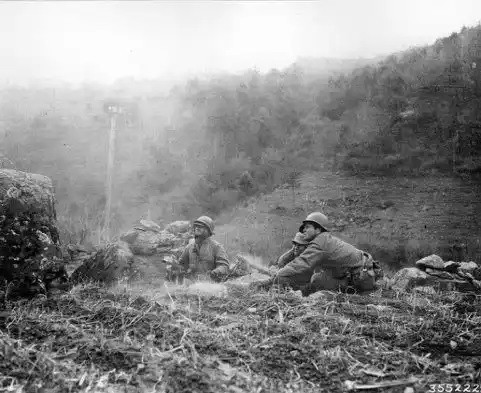
The unit’s origins date to 1899. Designated the 65th Infantry in 1920, it served in World War I, World War II and Korea. Its mostly Puerto Rican ranks served within a segregated military system. The 1948 order for equal treatment did not immediately end that segregation.
Read Congress’s historical findings ↗- 1899–1920From Puerto Rico’s volunteer regiment to the 65th Infantry designation.
- 1950Deployment to Korea; the Borinqueneers name becomes part of the regiment’s identity.
- 1951Combat near Seoul includes the February 2 bayonet assault described in Army histories.
- 1956–1959Regular Army deactivation followed by transfer of the 1st Battalion and regimental number to the Puerto Rico National Guard.
- 2014–2016Congress authorizes the collective Gold Medal; the presentation follows two years later.
Military courage and unequal treatment belong in the same historical account. The Army’s record describes battlefield performance under severe conditions and the prejudices the men confronted. Honoring them means preserving that complexity rather than reducing their lives to a slogan.
Army history and remembrance, April 11, 2024 ↗Beyond the battlefield: the fuller historical record
The regiment’s story includes service, discrimination, institutional change and the long work of public recognition. Explore these chapters alongside the photographs and biographies below.
A history larger than the Korean War
Congress’s findings describe service in the Panama Canal Zone during World War I, the 65th Infantry designation in 1920, and another Panama deployment in 1943. The Army documents deployment to Europe in 1944.
Congressional historical findings · June 10, 2014 ↗A difficult chapter deserves context
After Outpost Kelly and Jackson Heights, soldiers faced courts-martial. The Army’s historical account identifies leadership losses, rotation and training problems, ammunition shortages, declining morale and ethnic prejudice. Understanding those circumstances is essential to a responsible account of the regiment.
Read the Army’s historical account ↗Reorganization and continued service
The Army reconstituted the regiment as an integrated unit in spring 1953. Its history also records subsequent clemency and remission of sentences. The story continued beyond the trials, through further service and a decades-long struggle for recognition.
Examine the context and aftermath ↗From legislation to public recognition
The law’s legislative history records House passage on May 19, 2014, Senate passage on May 22 and enactment on June 10. The public presentation followed on April 13, 2016. Authorization and presentation are different milestones.
Read the enacted law and legislative history ↗The Army’s April 15, 2016 report documents the Capitol ceremony and veterans’ recollections. It offers a direct starting point for readers who want to move beyond a commemorative headline to the people behind the honor. Read the official source ↗
How the Congressional Gold Medal became reality
1 · Build recognition and congressional support
Veterans, families and advocates kept the regiment’s story visible. The White House account credits Pedro Pierluisi’s work and a bipartisan congressional effort led by Bill Posey and Richard Blumenthal. Recognition required federal legislation, not a routine individual military-award application.
White House account, June 11, 2014 ↗2 · Enact the award
President Barack Obama signed Public Law 113-120 on June 10, 2014. It authorized one gold medal honoring the regiment collectively and directed that the medal go to the Smithsonian after presentation, with availability for appropriate displays and research.
Public Law 113-120 ↗3 · Design, strike and present
The U.S. Mint produced the medal. Its front depicts a symbolic Borinqueneer; the reverse features El Morro. The collective presentation took place in Emancipation Hall at the U.S. Capitol on April 13, 2016. The signing and presentation were different events.
U.S. Mint: design and presentation ↗4 · Carry recognition to families
The law also authorized bronze duplicates. Later local presentations reached veterans unable to receive recognition at the Capitol ceremony. The Army documented a replica presentation to José Nicolás Latorre Ortiz in Aibonito in February 2019. A replica is distinct from the single collective gold medal.
Read the documented local presentation ↗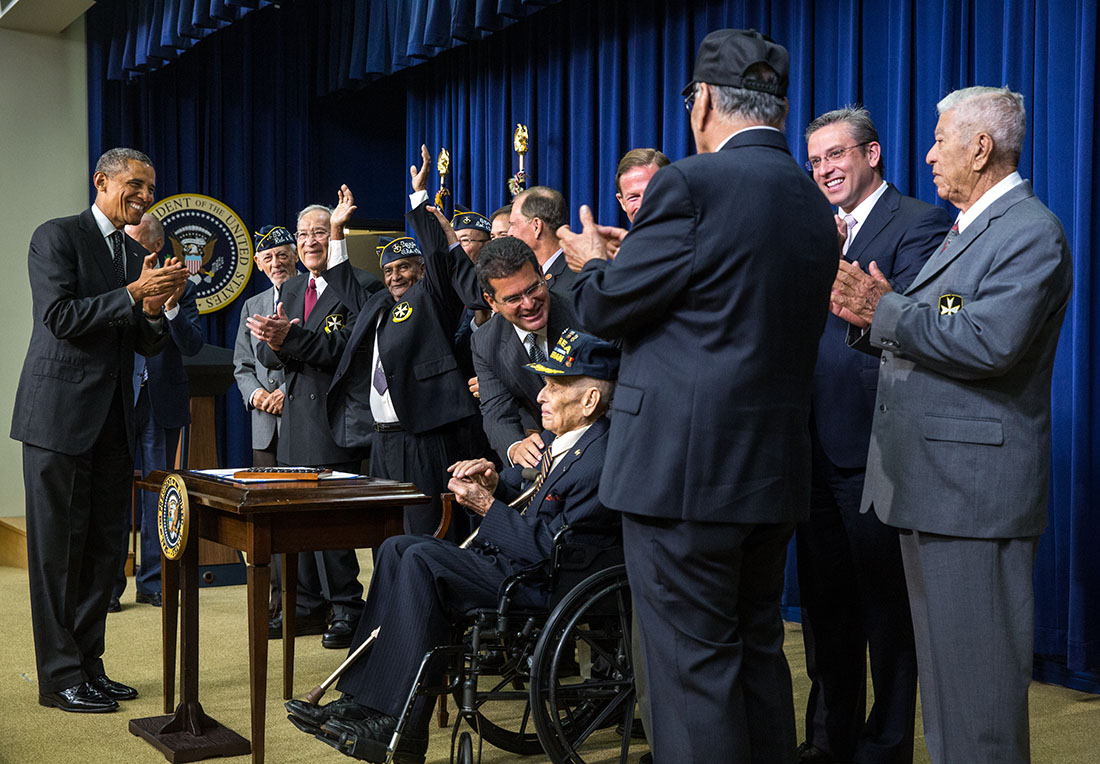
Gold Medal ≠ Medal of Honor
The Congressional Gold Medal recognizes the regiment collectively. The Medal of Honor is an individual award for military valor. Juan E. Negrón received the Medal of Honor posthumously on March 18, 2014, for his actions in Korea on April 28, 1951. These honors have different legal processes and recipients.
Army: Juan E. Negrón ↗Names, faces and individual lives
A selected, documented portrait gallery—not a complete regimental roster. Thousands served over successive generations; the photographs below identify only the people supported by their linked official captions. No portrait has been generated or substituted.

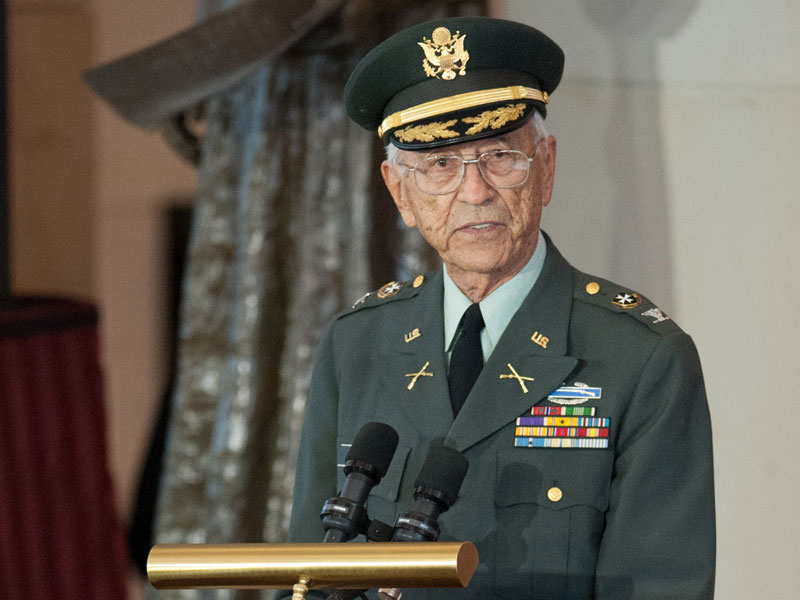
Manuel F. Siverio Sr.
Colonel who spoke at the collective medal presentation.
Read the official record ↗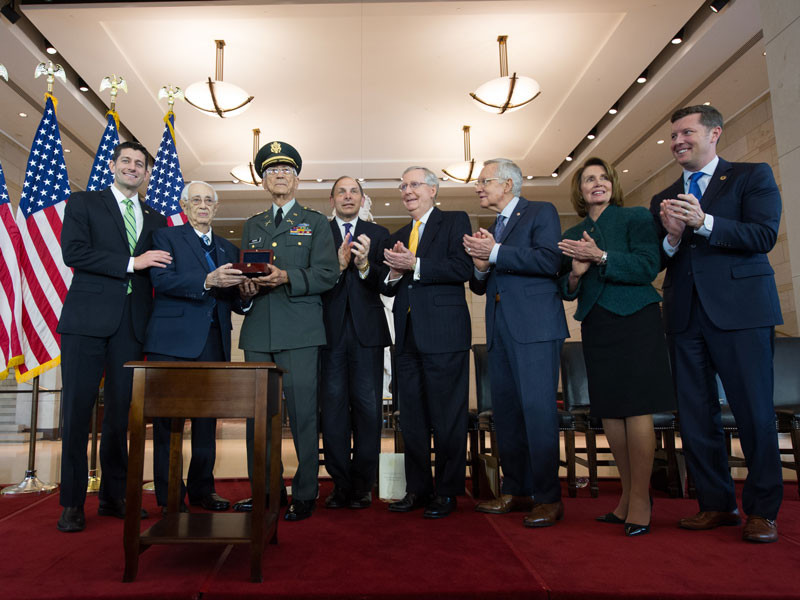
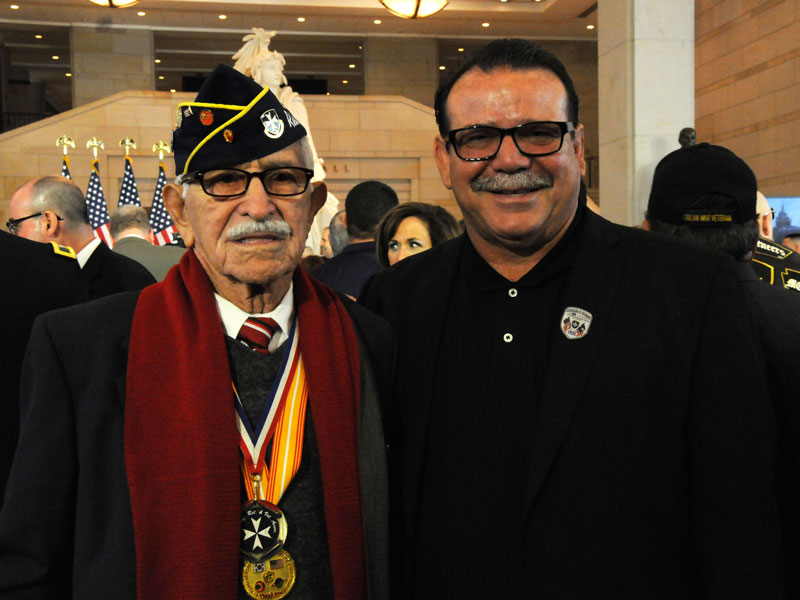
Miguel Rodríguez Colón
Private first class, pictured with his son at the ceremony.
Read the official record ↗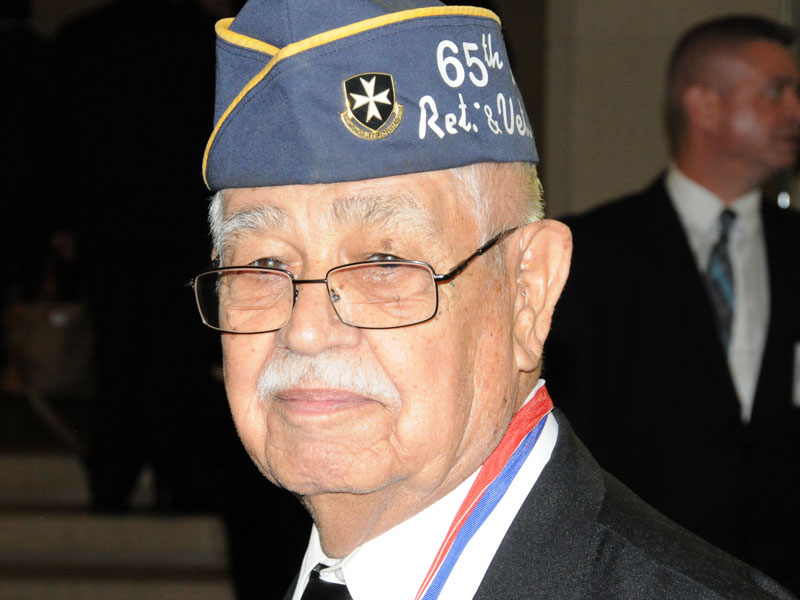
Modesto Cartagena de Jesús
His April 19, 1951 actions earned the Distinguished Service Cross. Fort Buchanan dedicated its visitor center in his honor in 2021.
Official biography and photographs ↗Víctor Labarca Lago
The Army recorded his reflections on lost comrades, teamwork and teaching the regiment’s history to younger generations in 2024.
Official biography and photographs ↗José Nicolás Latorre Ortiz
Born in Orocovis in 1927; joined the Army in 1952. His family joined him for the documented Aibonito replica presentation in 2019.
Official biography and photographs ↗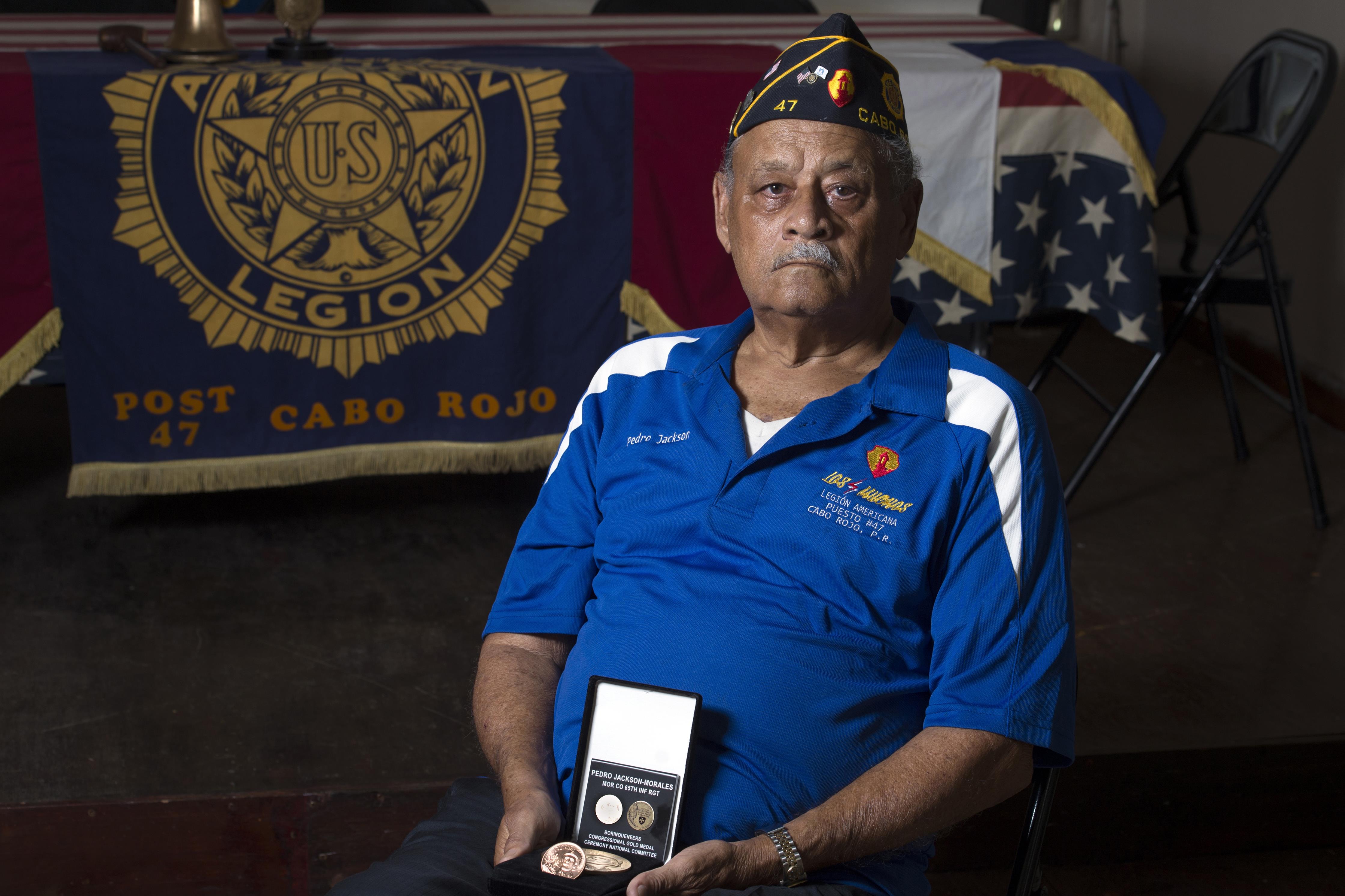
Pedro Jackson-Morales
A veteran of the 65th Infantry in Korea from 1950 to 1953. His published Army testimony recounts the courts-martial experience and the emotion of the 2016 recognition.
Official biography ↗Raúl Maldonado Peña
Served in the Army from 1952 to 1975, including combat in Korea and later Vietnam. He retired as a master sergeant and shared his recollections during the 2016 recognition.
Official biography ↗Víctor Vargas
His Army career spanned 1940 to 1963 and included World War II and Korea. The Army’s ceremony report records his memories of service and return to farming in Puerto Rico.
Official biography ↗Research a relative or help document a missing name
A missing name here is not evidence that someone did not serve. Verify unit, company, dates and identity through service records, contemporary documents and properly attributed family material. The National Archives explains access restrictions, archival records and requests by veterans or next of kin. Some records were lost in the 1973 personnel-records fire; alternate evidence may be needed.
Request military service records ↗ · External historical photo archive—not a complete roster ↗For a proposed addition, first contact info@naprec.org with the name and a public source link. Do not send Social Security numbers, medical records or unredacted service documents. A family photograph needs the rights holder’s permission and an identification that can be verified.
Build your family’s service history
A name in a family album can become the beginning of a documented story. The absence of a person from this page is not evidence that they did not serve.
Identify the person
Record the name used during service, approximate dates, branch and known unit. Distinguish confirmed facts from family recollections.
Request the record
Use the National Archives’ official request process. Access depends on the record’s age and your relationship to the veteran; archival records generally open 62 years after separation and copying fees may apply.
Account for missing records
The 1973 personnel-records fire damaged or destroyed millions of files. The National Archives may use alternate records to reconstruct service. A missing file is not the end of the inquiry.
Preserve the evidence
Keep originals, scan both sides of photographs and record who identified each person. Before publishing, obtain permission and remove private identifiers. Send official record requests through the government’s designated channels.
Request military service records ↗ · SF-180 and missing-record guidance ↗
A learning path for classrooms and community groups
Begin with one documented biography. Compare its personal experience with the congressional findings and the Army’s account. Then discuss three questions: What did service demand? What barriers did the soldiers encounter? What does equal citizenship require today? Label historical evidence separately from NAPREC’s present-day policy position.
From recognition to equal citizenship
The Borinqueneers’ record challenges a nation to reconcile the service it asks of its citizens with the rights it guarantees them. For NAPREC, honoring that legacy includes advocating statehood, equal voting representation and fair treatment for military families in Puerto Rico. The medal made their service part of the nation’s shared memory; democratic equality remains a present-day policy choice.
This is NAPREC’s position. The regiment’s service, the award and an individual veteran’s political beliefs are distinct. Neither a photograph nor military service proves endorsement of statehood or of NAPREC. Equal citizenship is a right to debate and pursue for every citizen, whether or not they served.
Sources, corrections & family history
Reviewed October 10, 2026. Each resource links to its official source. Documented history, program rules and NAPREC’s position are identified separately.
Report an error or suggest a source · Media inquiries
To contribute family history, begin with a description and source. Do not email Social Security numbers, medical records or unredacted military documents.